
This post is sponsored by Veetee Mega. As always, all views and recommendations are honest and my own.
Is it even a Fatima Cooks dinner party if there's no Yakhni Pulao on the table? My classic, signature dish - my no-fail, forever-favourite, ride-or-die. It's always a good day when there's Mutton Yakhni Pulao on the menu.
The process of the Yakhni Pulao, from selecting the spices and spooning them into my trusty spice infuser, slowly simmering the broth till the meat is tender, patiently frying thinly sliced onions till the perfect shade of brown, and finally combining it all together to create the perfect meal - it's all nothing short of therapy for me. Whether it's in the run up to a big dinner party at mine, or a busy weekday before school pick up, the process of cooking this up just brings me so much calm and joy.
It's not just comfort food to eat - for me, it's also comfort food to prepare, cook and serve.
And over years and years of cooking + perfecting this recipe, I've learnt that at the heart of a tender and soothing Yakhni Pulao is the basmati rice.
You can have the best selection of spices and the highest quality meat, but if your rice is luck lustre your Pulao just won't have the life and oomph it's supposed to have. You can't out-wash, out-cook, out-spice or out-garnish low quality rice. So because of this, in my home there are no compromises on rice, whether that's for a simple weeknight meal or a big Eid dawat.
I'm having an Eid get-together at my house this weekend, and it feels very fitting to share this recipe and my tips on how to get the perfect Yakhni Pulao, since this will be the star of my show 🤩
⭐ My ultimate tips for the best Yakhni Pulao
Select a premium quality extra long grain basmati rice
A hill I'm willing to die on. The impact a premium basmati rice has on your cooking is so huge! For me, a fluffy, tender platter of Yakhni Pulao instantly brings pride, life and joy to my celebration spread. Ensuring you've selected a reliable, high quality basmati rice like Veete Mega Premium Extra Long Basmati Rice is a sure-fire way to ensure your rice does justice to all the love and time you pour into your cooking.
Whole spices > powdered spices for fluffy rice
We want fluffy rice with individual grains, and powdered spices just weigh your rice down, making them gritty and speckled. Traditionally, Yakhni Pulao is made with whole spices that beautifully infuse into the meat and rice without adding bulk or texture. I highly recommend using a spice infuser like this, or a clean permeable cloth (a potli) to hold the whole spices, so you don't need to laboriously strain out the whole spices.
Select the right mutton
Bone-in meat is what's used traditionally in Yakhni Pulao. Yakhni is a broth - and what broth is made using boneless meat? The bones hold a ton of deep, mature, glorious flavour that cannot be replicated with boneless meat. And we could talk for days about the nutrition profile bone broth brings to the table and how ideal that is post Ramadan if you've been a fiend for pakoras, like me.
Pay attention to your onions!
Honourable mention to the onions too because they are SO important in dictating the colour of your rice! In my Pulao tips post, I talk about how the onions are like a dye for your rice, and so the deeper you fry them, the deeper the hue and flavour of your rice will be.
Lightly fried onions = sad, beige Yakhni Pulao with limp lifeless slivers of onions scattered through. Burnt, overdone onions = overly dark, bitter rice.
We're aiming for thinly and evenly sliced, golden brown onions and to get there, we need to spend some time TLC-ing them over the stove as we fry them.
🥘 Method
We start the Yakhni Pulao with the broth. Preparing this is a simple affair - in a deep, lidded pot, add your mutton, spices including salt, fresh garlic, green chilli (if using) and water (quantities specified in the recipe card at the bottom). Bring this to a rolling boil over a high heat, then cover with a tight fitting lid and cook over a low heat for 1.5 hours, or until the mutton is cooked through and soft, but still holding itself up. We definitely want to avoid the 'falling off the bone' stage.
Whilst the broth is cooking, wash your rice under running water - I do this by putting my rice in a colander and running cold water over it, until the water runs clear. Use your hands to gently swish the rice around as you wash it - this is essential to ensure you get all the starch out.
Once washed, place your rice-filled colander into a large bowl with enough cold water to submerge the rice. Allow the rice to soak for a minimum of 30 minutes and upto 90 minutes. Drain the rice before cooking with it.
Once your broth is cooked and the rice has been soaked for the times stated, we're going to bring out another pot to combine everything together.
Heat some oil or ghee in the new pot, and once hot, add finely sliced onions. Fry over a medium to high heat, keeping a close eye on them to ensure they brown evenly. You'll need to stir often, particularly once they begin to catch some colour. You want to get your onions to a dark golden shade, as shown below. Adjust the heat to a lower setting if you feel like they are browning unevenly, or becoming too dark too quickly.


This is where things can get a bit hectic. Now you're going to spoon out the mutton from your pot of broth- a slotted spoon is ideal for this, and then add this alongside your frying onions. See below for how I set this part of the process up (cooking onions are in the back).
Fry the meat alongside the onions until the meat catches colour and the onions turn dark brown.


Now from the pot of broth, we are going to measure out the liquid. Precise quantities are listed in the recipe card at the bottom, and it's very important the quantities are exact to ensure that fluffy rice grain we're after. If you're short of broth, you can use water to get to the right quantity of liquid needed. If you have leftover broth, reserve it for something else.
Bring everything to a rolling boil, then add in your washed and soaked rice. Allow everything to cook over a high heat, folding the rice very gently using a flat spatula or rice paddle, as opposed to stirring or being aggressive. Gently scrape the bottom of the pot too throughout the cook time, to make sure nothing is sticking.
Once most of the water has evaporated but the rice looks moist, as shown below, check the doneness of the rice by spooning a few grains out and trying one. It should feel stiff and not quite ready - about 80% done. This takes between 7-10 minutes but it's imperative you stay close by to keep an eye out because this can vary. Once your rice is at the stage described, it's ready for the final step. If it's still feeling raw and brittle, add half a cup of boiling hot water and continue to cook in this way until the rice is as described above.


Turn the heat down to as low a setting you can get it. Place a tight fitting lid lined with a clean tea towel on top, and allow everything to steam cook for a minimum of 15, and up to 30 minutes.
This is where the magic happens - the rice absorbs the remaining moisture and become dreamily fluffy, the flavours marry into the rice, and the mutton becomes that perfect level of tender.

Once steamed, lift the lid and immediately fluff the rice. To do this, use a flat paddle or even a small side plate, and starting from the sides of the pot, gently wiggle the rice out of place, to loosen it up and allow it some breathing space. Do this for all the rice including the rice at the bottom - this is essential to ensure none of the rice grains become squashed or gummy, particularly the rice at the bottom. Do this even if you aren't serving the rice immediately.

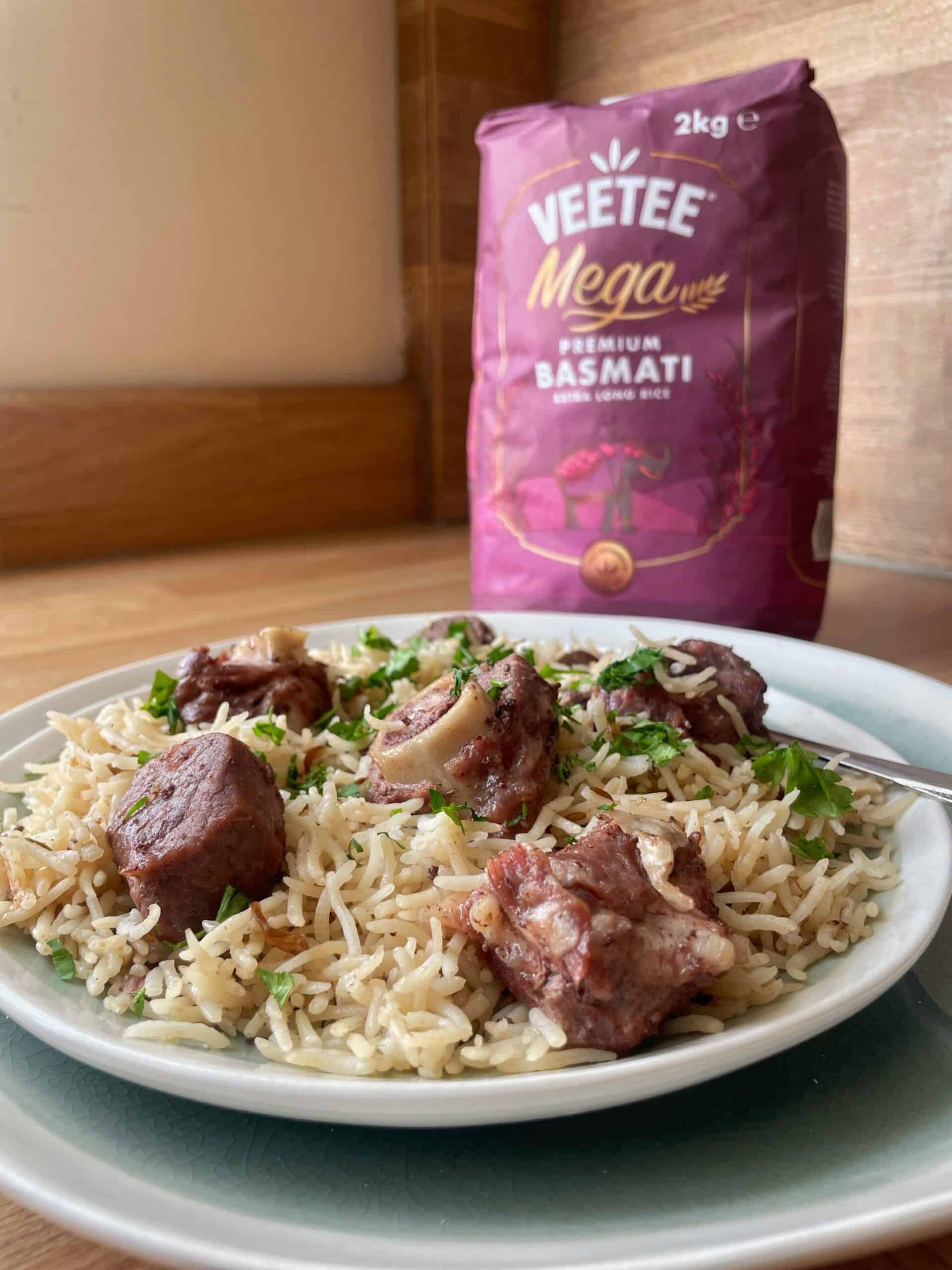
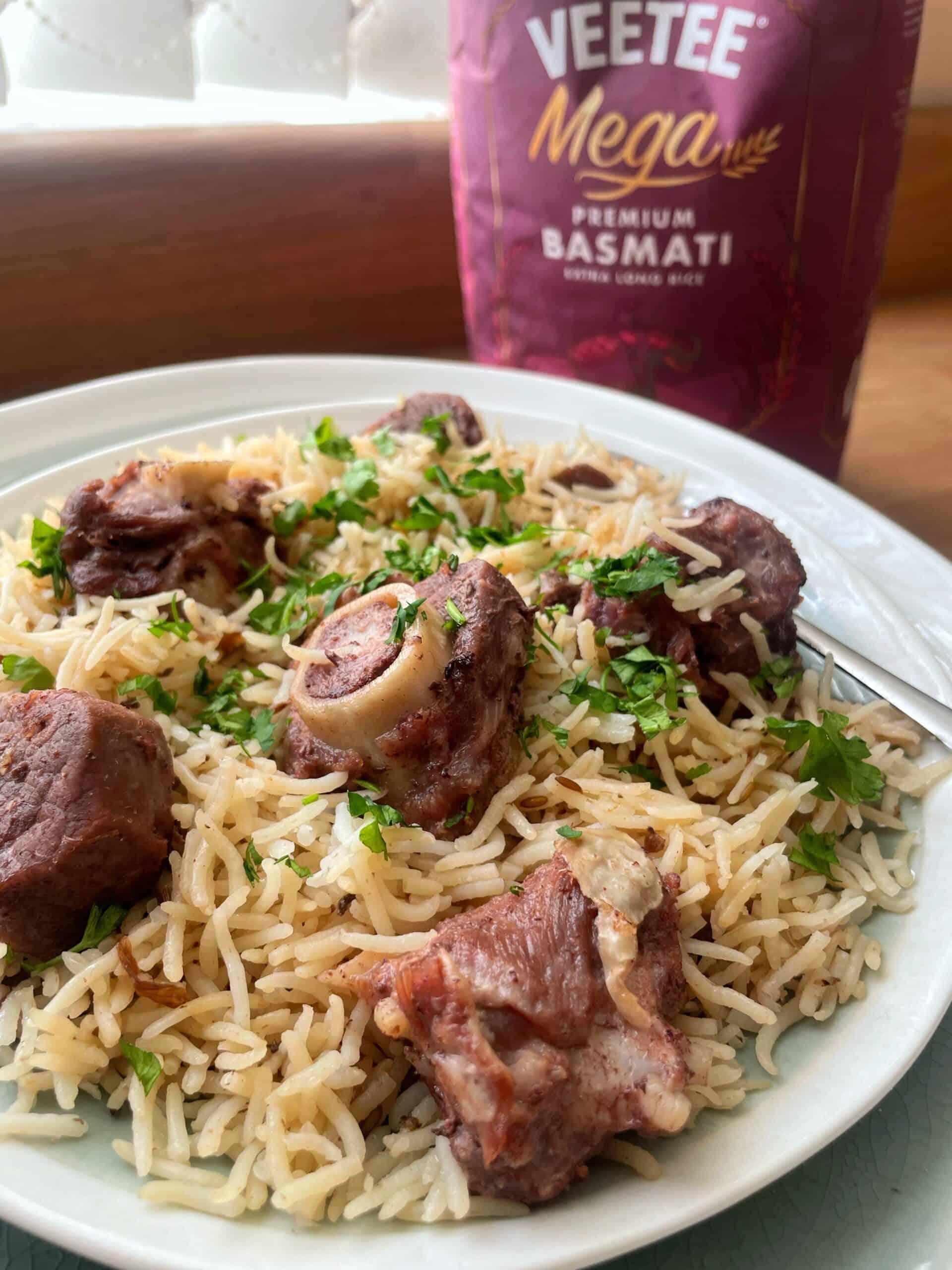
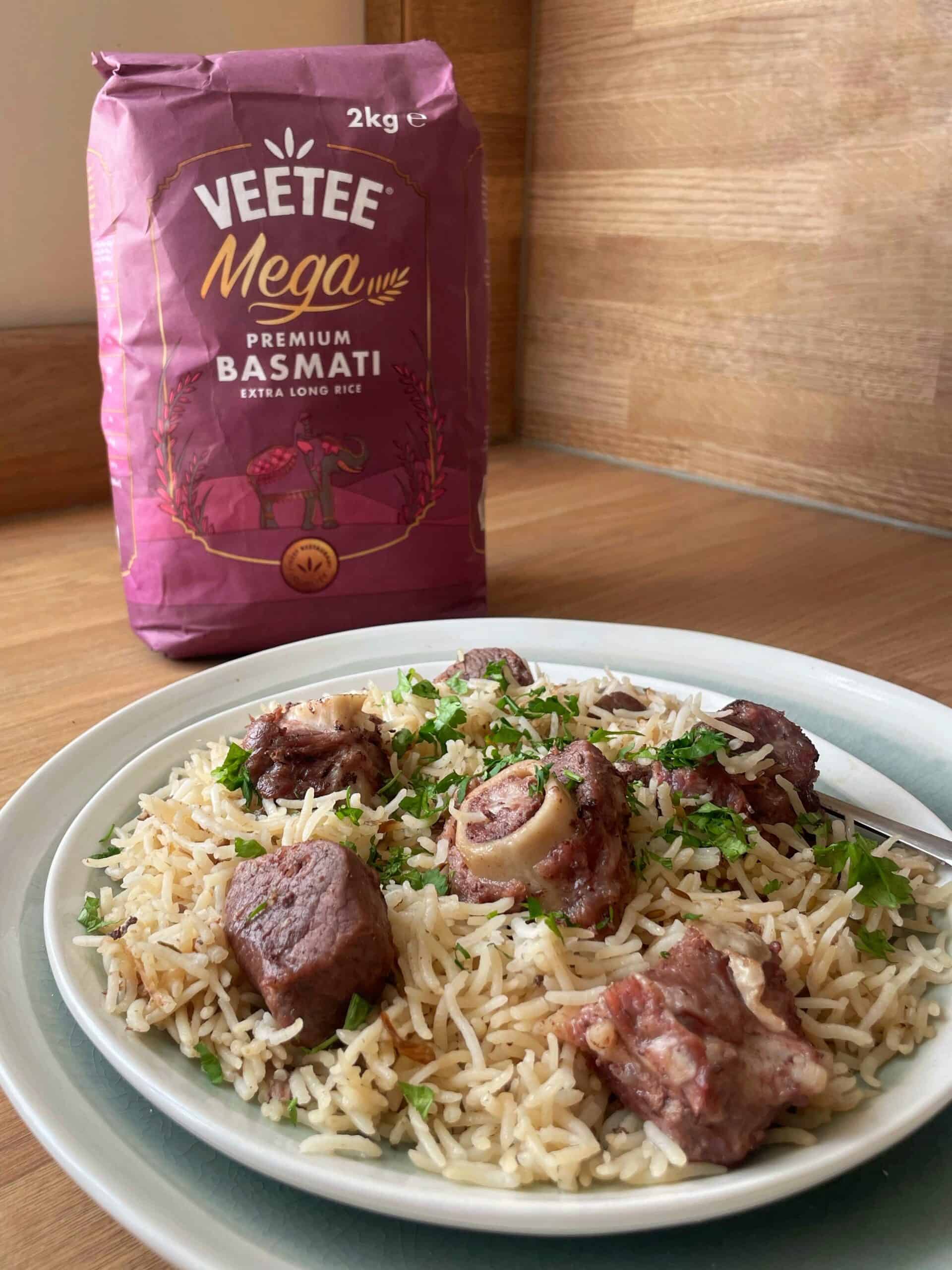
Look at the perfect texture of rice I've gotten, thanks to Veetee Mega's Premium Extra Long Rice!
Mutton Yakhni Pulao is ideally served immediately, and goes beautifully with a salad and green chutney or raita on the side.
Whether it's a grand celebration or those everyday moments, Veetee Rice brings authentic flavours to the table. Celebrate tradition, heritage and culture whilst creating new + cherished memories together with your loved ones.
📋 Recipe

Mutton Yakhni Pulao
Ingredients
Whole spices for the broth
- 2 black cardamoms, whole
- 12 green cardamoms, whole
- 2 tablespoon coriander seeds, whole
- 2 tablespoon black pepper corns, whole
- 2 tablespoon cumin seeds, whole
- 6 cloves, whole
- 3 bay leaves, whole, whole
- 1 large cinnamon stick
Other broth ingredients
- 3 fresh green chillies, whole (optional)
- 6 teaspoon salt, or to taste
- 2.2 lb (1 kg) mutton, bone in
- 10 cloves garlic, whole (equates to about 3 teaspoon minced garlic)
- 8 cups (2 l) water
Remaining ingredients
- 5 tablespoon (75 ml) oil or ghee
- 2.5 (275 g) medium onions, sliced into fine and even slivers
- 1 tablespoon cumin seeds, whole
- 4 cups (800 g) long grain basmati rice (I recommend Veetee Premium Long Grain Basmati Rice) washed and soaked for up to 90 minutes
Instructions
- Place all the whole spices for the broth into a spice infuser or a permeable clean cloth (see notes for what to do if you do not have these). Place all the broth ingredients into a deep pot. Bring to a boil, then cover with a lid and simmer over a low heat for 1.5 hours, or until the mutton is cooked through and soft, but not falling of the bone.
- Once the broth is cooked, in a seperate pot heat oil/ghee over a medium to high heat. Add the sliced onions and fry, stirring often, until they turn a deep shade of golden. Reduce the heat if you feel the onions are browning too quickly or unevenly.
- Strain the mutton from out of the broth, and once the onions are golden, add these in. Try to avoid getting too much moisture from the broth into this. Saute the mutton over a high heat alongside the onions, until the mutton catches a golden colour and the onions turn dark golden. Add the cumin seeds in for the final minute.
- Add 5 cups of the prepared broth. The garlic cloves should have broken down themselves by now, but if they haven't, you can mash them with a fork and add them in too, alongside the green chillies if used. If you are short of broth, top up with plain water.
- Bring to a rolling boil, then add the basmati rice. Continue to cook over a high heat, folding the rice gently to make sure the rice grains don't break, whilst ensuring nothing is sticking to the sides or bottom of the pot. This may take between 7-10 minutes, but you will need to remain close at all times as times can vary.
- Once most of the liquid has evaporated from the rice, check the rice for doneness. It should be about 80% done - stiff and with a noticeable bite, but definitely not raw. At this stage, turn the heat down to the lowest possible setting, and cover the rice with a tight fitted lid (optionally lined with a clean tea towel).
- Allow everything to cook over this low heat for between 15 to 30 minutes, undisturbed. Do not open the lid during this time.
- Fluff up the rice using a flat paddle or a small side plate immediately after. Yakhni Pulao is best served immediately!
Notes
- All cup measurements are standard 250 ml measuring cups.
- IMPORTANT: If you are cooking more or less rice than in the recipe
The ratio of rice to broth liquid needed will change if you aren't using the quantities in the recipe. The formula I use is for every cup of rice you cook, you will need the same number + 1 cups of water. If you are cooking 2 cups of rice, use 3 cups of broth. If you are cooking 10 cups of rice, use 11 cups of broth, and so forth. - If you do not own a spice infuser or a clean permeable cloth, you can add the whole spices directly into the broth. You will need to sieve them out before using the broth in Step 4 using a strainer, slotted spoon or colander.
- After Step 1, you may discard the spices. However, if you've used a small spice infuser, you can choose to add it in alongside the broth liquid in step 4 for some a more pronounced aroma and flavour.
📩 Want me to email this recipe to you?
Enter your email & I'll send it right over.
Plus, you'll get bonus Pakistani food-goodness from Fatima Cooks, like new recipe alerts, exclusive email-only recipes + more!
By submitting this form, you consent to receive emails from me. Your details are secure. Opt-out any time.


Nida
For 2 cups of rice 3 cups of broth. It also depends on the quality of the rice
Jessica
Hi, thanks for sharing your recipe. Can you recheck the note for the broths v/s cup of rice. If I’m using 2 cups rice then I use 4 cups broth right? Or I should be using 5 cups broth? The explanation is a bit confusing. Can you please clarify. Thank you
Mary
Loved this
Mina
I'm so happy and grateful to you as I will make your mutton palou for Eid tomorrow inshaAllah.
I just realised you don't use ginger for the palou but garlic.